A walk on the wild side with a ‘WRGIE’
I am a volunteer for Waterway Recovery Group, and this year I have been working on the dry part of the canal during the first week of July, at Fosseway Heath in Lichfield. Here the Lichfield and Hatherton Canal Trust are restoring a one-mile section of canal for the local community and the enhance the site for wildlife. (Read more on the Fosseway project here)
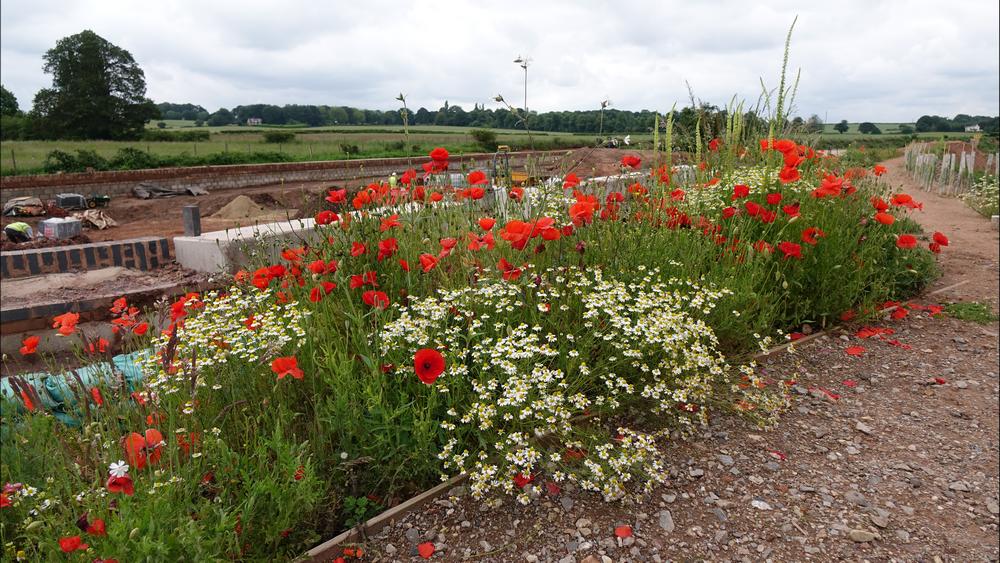
We know that many a building site looks awful and the wildlife disappears as they have to find a new home. The habitats do alter and new plants and insects quickly begin to establish themselves. Over the week I inspected a section of this Canal that had recently been restored between December and January 2018-2019, to see what early successional plants had taken. To our surprise the area had recovered very quickly and was thriving. This blog will take you through my findings and explore the interesting wildlife uncovered.
A bit of background: Fosseway Heath is a narrow area about 1 mile long between farmer's fields and a raised disused railway embankment. The soil is very dry and is acidic in most places with a hedgerow expanding along the towpath side and thickets of bramble and secondary succession species along the railway embankment.
The site was a riot of self-seeded flowers and deeply rooted plants that recovered and responded to new conditions. Let me list them, with some of the benefits they have.
There’s a large clump of nettles – the best place for furry caterpillars of the peacock butterfly. Of course, they are also food for us – nettle soup! Once nettle leaves are boiled, they lose the power to sting. Nettle pesto is also nice with pasta! In medieval times, thrashing your back with a bunch of nettles was a cure for arthritis.
There is white Briony, making garlands of white flowers which will be followed in autumn by necklaces of red berries. Although they are poisonous to us, the birds find them quite a delicacy.

Higher up the bank are brambles. They provide a great source of nectar for bees and flying insects which the predatory orb spider catch in their webs. The fruits are consumed by field mice, blackbirds and other garden birds and in autumn butterflies and wasps will eat the over-ripe fruits.
Higher still, amongst the gravel of the train bed, are another group of plants loved by grazing rabbits. Ants and solitary wasps and jumping spiders. The railway embankment provides a dense cover from predators so rabbits, foxes, mice, voles and it will probably will attract hedgehogs to make a home there.
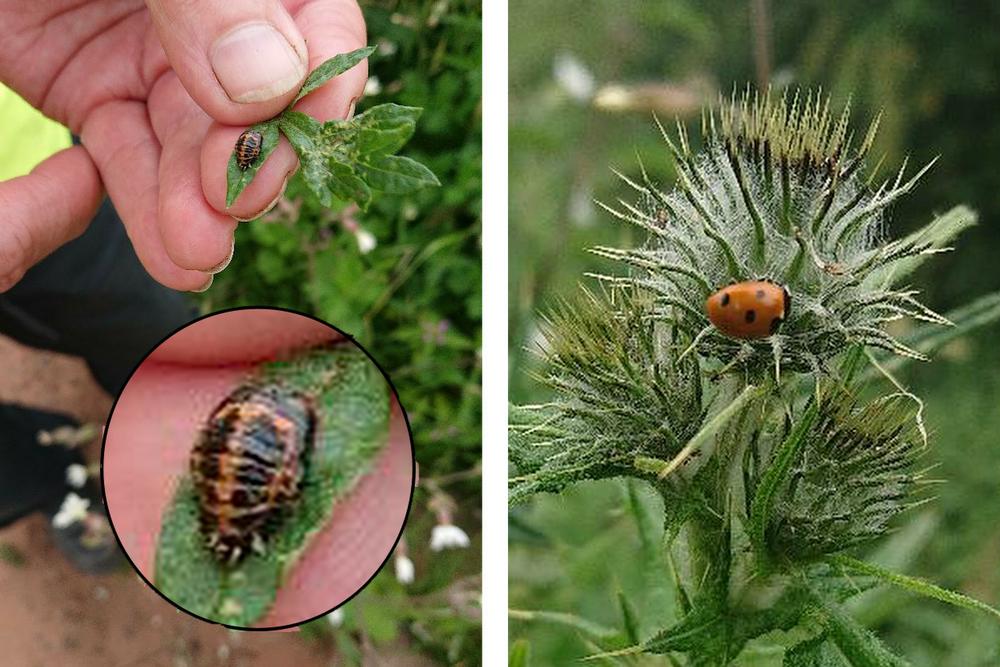
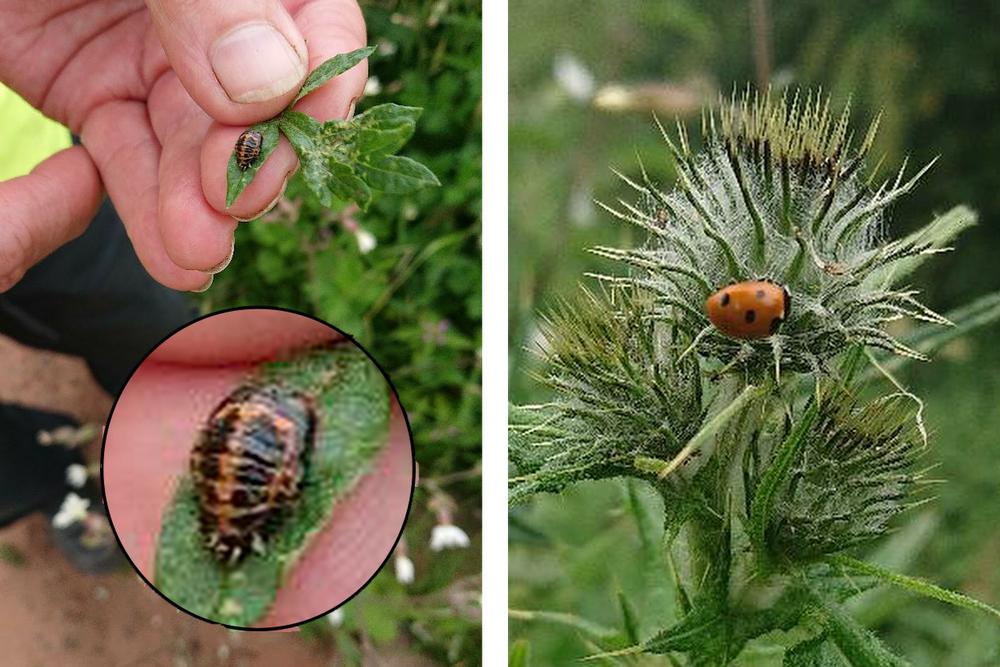
Along the canal path between oak trees, we identified many ladybirds and their larvae, which are a natural pesticide to aphids and other species that are considered a pest to your garden.
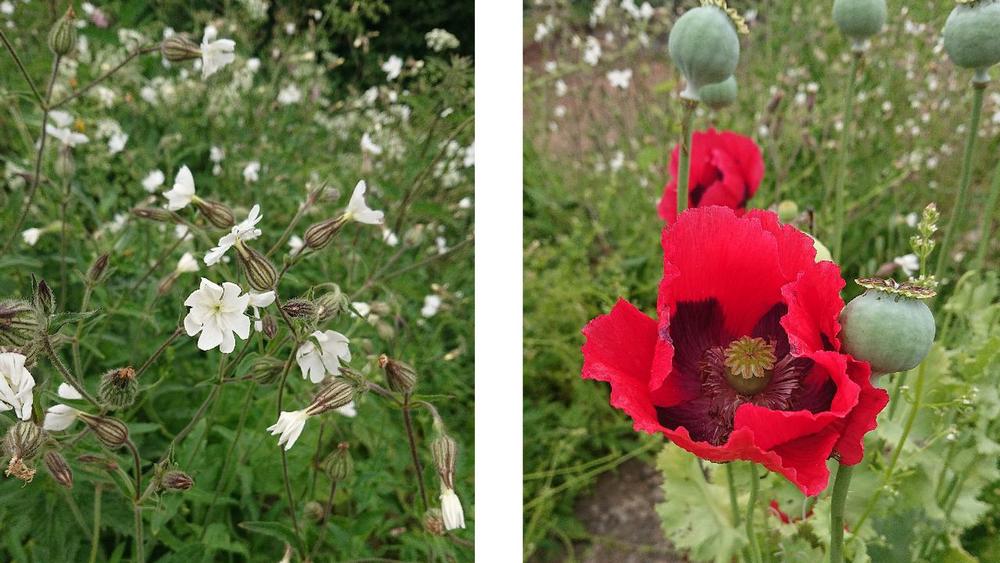
There were grasshoppers and other bugs, hoverflies and at least two different species of bees. The predominant flower along the path is the white campion, with big ornamental poppies naturalised and deposited by birds in their droppings. The red ones with black bases to their petals are known as ladybird poppies but we saw no ladybirds on the plants but plenty of hoverflies.
Amongst the red and white flowers were others. The red spires of Rosebay willow herb were probably brought over from America by rail men who went to build their railways. They have spread throughout Britain, mainly on railway sidings and cuttings.

Comfrey has large green leaves and is one of the first plants to establish themselves. Their leaves make a wonderful liquid fertiliser for garden plants. 6 leaves in a bucket of water, leave for 4 weeks and stir. It smells horrible! Dilute it half and half with water and feed your special plants after rain!
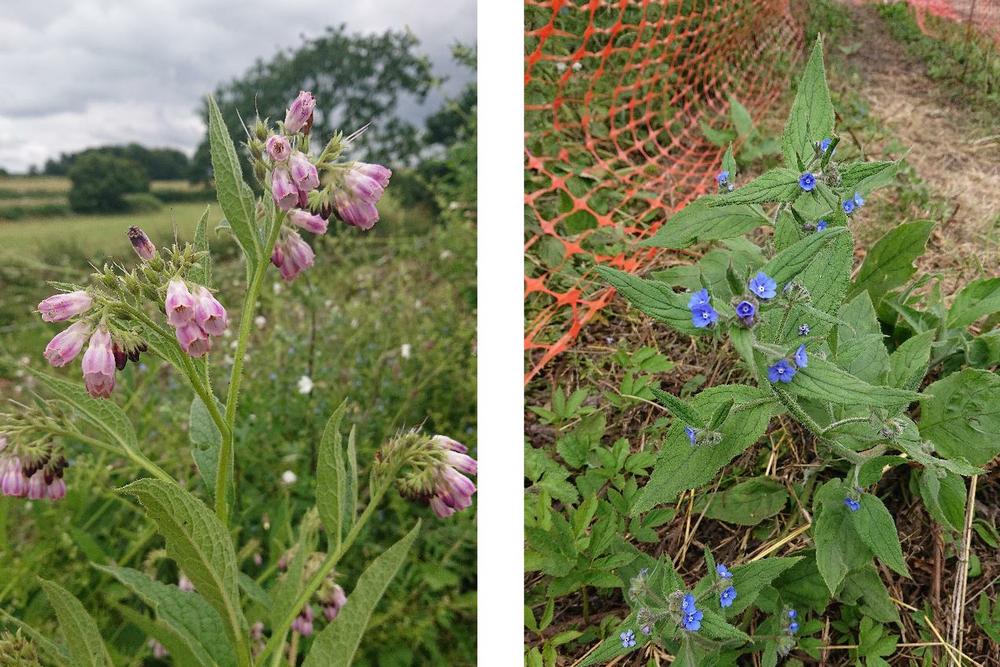
Green Alkonet is the bright blue flower that looks like a big forget-me-not. It has tiny hairs on the stem and leaves so climbing insects cannot reach the flowers – bees love it though! It also has long tap roots, like comfrey so it can reach the damp soil.
Right on the edge of the path are some smaller plants. The scarlet pimpernel
actually closes its petals when it rains, making it hard to spot on a cloudy
day. Blackbirds, black beetles and robins have been around us whilst digging
out the old canal looking for worms, centipedes and millipedes. It’s been very
good or the birds but not so good for the mini-beasts.

An old, brown toad was carefully moved to the damp area under the hedge where it sheltered under a rotting trunk. There were plants that we photographed but didn’t recognise and quite a few min-beasts also. The area has created a diverse habitat and a wild-life corridor which should continue to grow and bring enjoyment for many years.
By Christine Monks
Photos by Lucy Brundell
WRG July 2019